|
|
 |

 |
 |
 |
 |
 |


|


Stevens Point Normal Domestic Science Overview
 hen the eight-year-old Stevens Point Normal School in 1902 determined
that its first specialty program would be domestic science, it joined a small number of campuses in the nation
to provide practical education for young girls, education which would be used either for applying scientific
principles to home functions or for becoming a teacher of domestic science in grade or high schools. The
period of the early 1900's was considered the "progressive" era, beginning to mark a stark transition from
traditional roles for the genders and classical curriculum, as well as the emergence of social reform. There
were very few women enrolled in higher education and women still could not vote. hen the eight-year-old Stevens Point Normal School in 1902 determined
that its first specialty program would be domestic science, it joined a small number of campuses in the nation
to provide practical education for young girls, education which would be used either for applying scientific
principles to home functions or for becoming a teacher of domestic science in grade or high schools. The
period of the early 1900's was considered the "progressive" era, beginning to mark a stark transition from
traditional roles for the genders and classical curriculum, as well as the emergence of social reform. There
were very few women enrolled in higher education and women still could not vote.
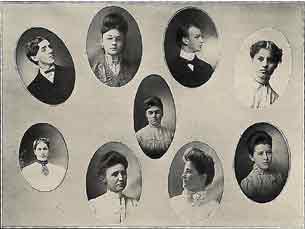
 ay Secrest was appointed director and teacher for the new course in
domestic science, which enrolled eight women, but stayed only two years before taking a position elsewhere.
In fact, none of the early faculty stayed more than a few years until the arrival of Bessie May Allen in 1913.
Nonetheless, enrollments in domestic science were growing as people heard good things about the program and
noted that no other normal offered this course of study. In 1910 there were about 50 juniors in the program.
The December 1910 Pointer notes that the juniors were studying sugar, its composition, food value and other
theoretical aspects, followed by several lessons in candy making, just in time for the holidays. ay Secrest was appointed director and teacher for the new course in
domestic science, which enrolled eight women, but stayed only two years before taking a position elsewhere.
In fact, none of the early faculty stayed more than a few years until the arrival of Bessie May Allen in 1913.
Nonetheless, enrollments in domestic science were growing as people heard good things about the program and
noted that no other normal offered this course of study. In 1910 there were about 50 juniors in the program.
The December 1910 Pointer notes that the juniors were studying sugar, its composition, food value and other
theoretical aspects, followed by several lessons in candy making, just in time for the holidays.
|
|
 |
|
|
 
|
 |
|
|